Uncategorized
Forced Circulation vs Falling Film vs Natural Circulation Evaporators
Forced circulation, falling film and natural circulation evaporators all remove water by boiling it off with steam. What separates them is how the liquid moves over the heating surface. That one difference decides which liquids each can handle, how often it needs cleaning and what it costs to run.
The short answer
- Forced circulation: a pump drives the liquid through the heater. Choose it when the liquid scales, fouls, crystallizes or is viscous.
- Falling film: gravity carries a thin film down the tubes. Choose it for clean, free-flowing, heat-sensitive liquids.
- Natural circulation: the boiling itself drives the liquid round, with no pump. Choose it for clean, thin liquids and simple duties.
How each one moves the liquid
Forced circulation
A circulation pump pushes the liquid up through the heater tubes at high velocity. The liquid is kept under pressure so it does not boil on the tube wall, then flashes in a separator. The concentrate returns to the pump and goes round again. The velocity is set by the pump, not by the liquid, so it stays high even when the liquid is thick or full of crystals.
Falling film
The feed is spread over the top of vertical tubes and runs down the inside as a thin film. Steam heats the outside, and the water evaporates from the film surface. The liquid spends only a short time on the hot surface, which protects heat-sensitive products. But the film needs a clean, free-flowing liquid: salts that come out of solution deposit on the tubes and the film breaks up.
Natural circulation
Steam heats the liquid in a short tube bundle, the calandria. The heated liquid becomes lighter, rises and boils, and the cooler liquid falls back through a downcomer. No pump is needed, so the unit is simple. As the liquid thickens, though, the circulation slows down, and slow flow on a hot surface is where scaling starts.
Side by side
| Forced circulation | Falling film | Natural circulation | |
|---|---|---|---|
| What moves the liquid | Circulation pump | Gravity | Density difference from boiling |
| Liquid velocity | High, set by the pump | Low | Low, falls as the liquid thickens |
| Scaling and crystallizing liquids | Well suited | Not suited | Not suited |
| Viscous liquids and solids | Well suited | Not suited | Limited |
| Heat-sensitive products | Moderate, helped by vacuum | Well suited | Moderate |
| Running cost | Pump power on top of steam | Low | Low |
| Typical use | Effluent and ZLD, crystallization, brine, chemicals | Dairy, juices, pharma, pre-concentration | Sugar juice, salt solutions, simple duties |
Why plants often use two of them
Many liquids start clean and thin and only become difficult near the end, when they are concentrated enough to scale or crystallize. A common answer is to let a falling film evaporator do the first, larger part of the evaporation cheaply and gently, then finish in a forced circulation evaporator that can take the scaling and the crystals. In a multi-effect plant the first effects are often falling film and the last effects forced circulation, for the same reason.
How to decide
- Does anything come out of solution as the liquid concentrates? If salts scale or crystals form, forced circulation belongs in the plant.
- How thick does the liquid get? If it becomes viscous or carries solids, forced circulation keeps it moving.
- Is the product sensitive to heat? If yes, consider falling film for the first stage and vacuum on the forced circulation stage.
- Is the liquid clean and thin all the way? Then falling film or natural circulation may be all you need.
- How big is the duty? On large flows, look at a multi-effect arrangement to cut steam use.
Ask Acmefil
Acmefil builds forced circulation, falling film, natural circulation and multi-effect evaporators, so we recommend the one that fits your liquid. Send us the feed, the target concentration, what scales or crystallizes out and the flow, and our engineers will come back with the arrangement we propose and a budget quote.
Forced circulation and its neighbours
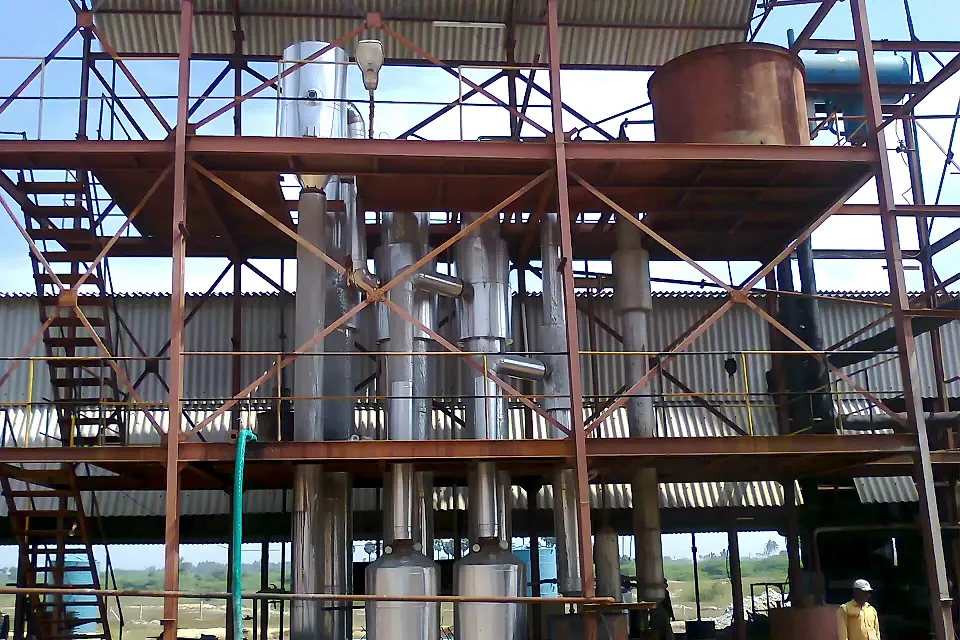
Forced circulation evaporators
A pump drives the liquid through the heater tubes at high velocity and into a separator. The heating surface stays clean, so scaling, crystallizing and viscous liquids keep running.
- Scaling & crystallizing liquids
- Viscous feeds
- Effluent & ZLD
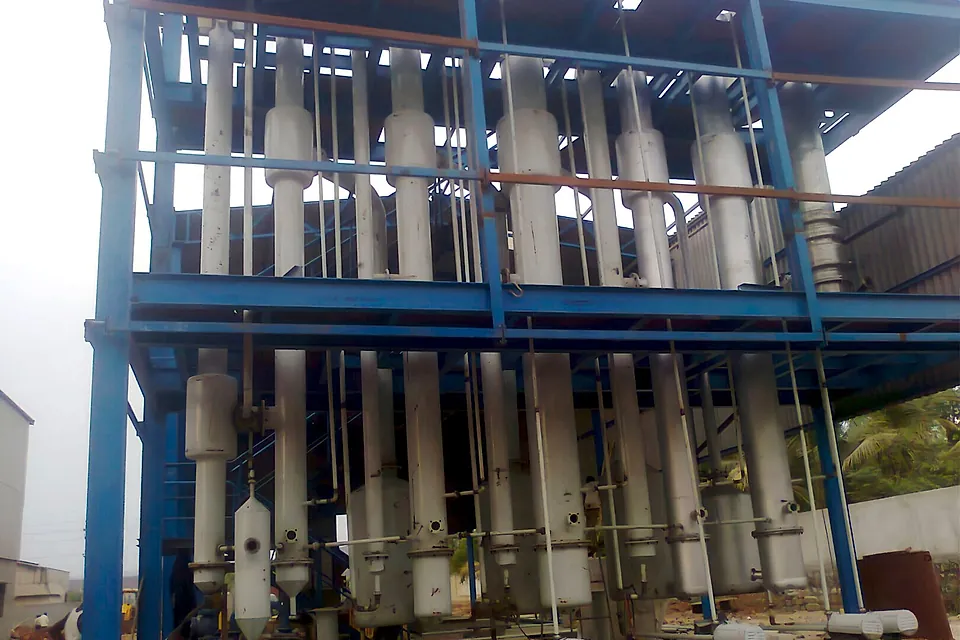
Falling film evaporators
The liquid runs down the inside of vertical tubes as a thin film. Gentle heat and a short residence time suit clean, free-flowing, heat-sensitive liquids.
- Heat-sensitive products
- Free-flowing liquids
- Short residence time
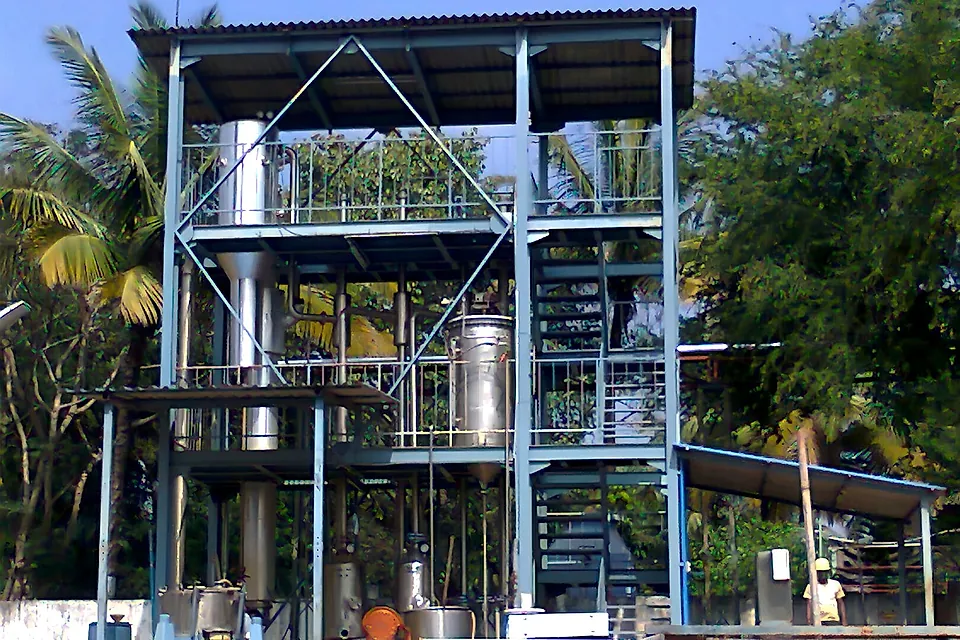
Natural circulation evaporators
Heating makes the liquid rise in the tubes and fall back through a downcomer, with no pump. Simple and economical for clean, low-viscosity liquids.
- No circulation pump
- Simple to run
- Clean liquids
Send your process data. We reply with a recommendation and a budget quote.
Get my proposalWhatsApp
Process engineers at Acmefil Engineering Systems Pvt. Ltd., Ahmedabad – designers and manufacturers of forced circulation and other evaporators, zero liquid discharge plants, dryers and air pollution control equipment since 2000.