Uncategorized
Forced Circulation Evaporators for Crystallization and Zero Liquid Discharge
Two of the hardest jobs an evaporator can be given are making crystals and taking industrial effluent to zero liquid discharge. Both mean concentrating a liquid until its salts come out of solution. That is exactly where film evaporators foul and where forced circulation evaporators earn their place.
Why these duties are difficult
As water is removed, dissolved salts become more concentrated. Past the saturation point they start to come out of solution. If that happens on a hot tube wall, they form scale, heat transfer drops, and the plant has to stop for cleaning. Effluent adds more trouble: it changes from day to day, can carry organics and suspended solids, and often contains chlorides that attack ordinary steels.
How a forced circulation evaporator handles them
- Boiling away from the wall. The liquid is kept under pressure in the heater, so it does not boil on the tubes. It flashes in the separator instead.
- High velocity. The circulation pump sweeps the tubes and keeps crystals and solids in suspension.
- Crystals in the slurry, not on the tubes. The circulating slurry gives the salts somewhere to grow other than the heating surface.
- Controlled draw-off. A bleed takes out slurry at the rate that holds the loop at the right concentration.
Forced circulation crystallizers
When the aim is a crystalline product, such as a salt, a sulphate or a chloride, the forced circulation evaporator works as a crystallizer. The separator is sized so the crystals have time to grow, and the slurry goes to a centrifuge or filter. The mother liquor returns to the loop or, if it carries impurities that build up, part of it is purged.
Points our engineers look at for a crystallizing duty:
- The solubility of the salts at the operating temperature, and whether more than one salt comes out
- The crystal size you need, which sets the separator volume and the circulation rate
- Abrasion from the crystals on the pump and pipework
- How the slurry is taken out and separated, and where the mother liquor goes
Forced circulation in a zero liquid discharge plant
In a zero liquid discharge (ZLD) plant no liquid effluent leaves the site. The water is recovered and the dissolved solids leave as a dry or near-dry solid. A typical ZLD train looks like this:
- Pre-treatment. Removes oil, suspended solids and the hardness that would cause the worst scaling.
- Membranes. Ultra filtration and reverse osmosis recover a large part of the water without heat and send a smaller, stronger reject stream onward.
- Multi-effect evaporator. Concentrates the reject using steam several times over. The later effects, where scaling is most likely, are often forced circulation.
- Forced circulation evaporator or crystallizer. Takes the liquid past saturation so the salts crystallize in the slurry.
- Agitated thin film dryer (ATFD) or another dryer. Dries the final concentrate or slurry to solids for disposal or reuse.
The condensate from the evaporators is recovered and returned to the process. The exact train depends on the effluent: some plants skip the membranes, some send the concentrate straight from the forced circulation stage to the ATFD.
Materials of construction
Effluent and brine duties are often corrosive. Chlorides, acids and high temperatures decide the alloy of the tubes, the separator and the circulation pump. Choosing the material for the most aggressive conditions in the loop, not the average, is one of the most important design decisions.
What to send for a crystallization or ZLD enquiry
- A full analysis of the liquid: total dissolved solids, the main salts, chlorides, hardness, organics, pH and suspended solids
- The flow, and how much it varies
- What must leave the plant: crystals, a concentrate or dry solids
- Steam, cooling water and power available
- Any pollution control or discharge conditions that apply to your site
Ask Acmefil
Acmefil Engineering Systems Pvt. Ltd. builds forced circulation evaporators and crystallizers, multi-effect evaporators, membrane systems and agitated thin film dryers, and puts them together into complete zero liquid discharge plants. Send us your effluent analysis or your crystallization duty and our engineers will propose the arrangement and send a budget quote.
Forced circulation and its neighbours
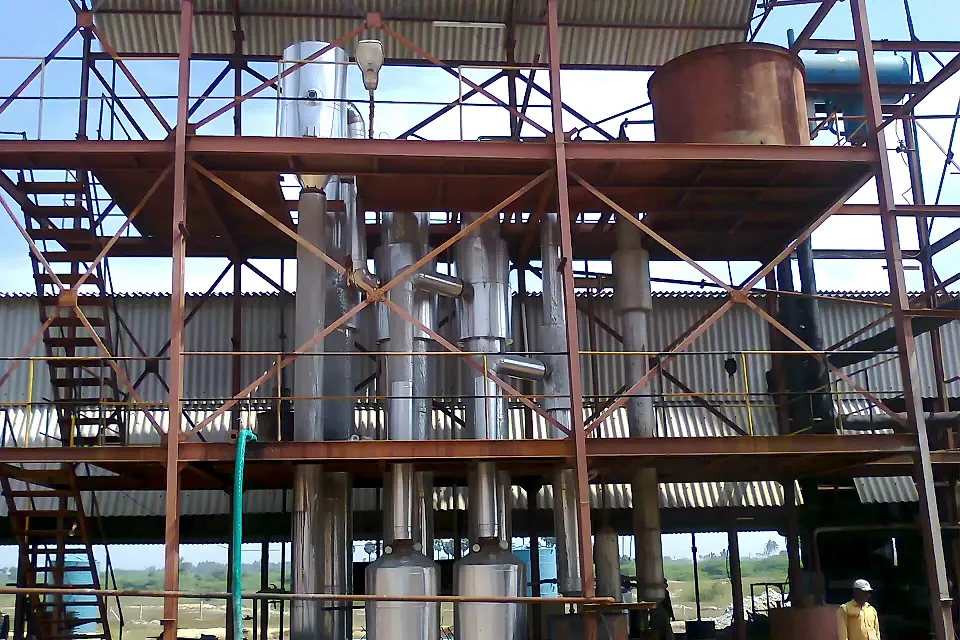
Forced circulation evaporators
A pump drives the liquid through the heater tubes at high velocity and into a separator. The heating surface stays clean, so scaling, crystallizing and viscous liquids keep running.
- Scaling & crystallizing liquids
- Viscous feeds
- Effluent & ZLD
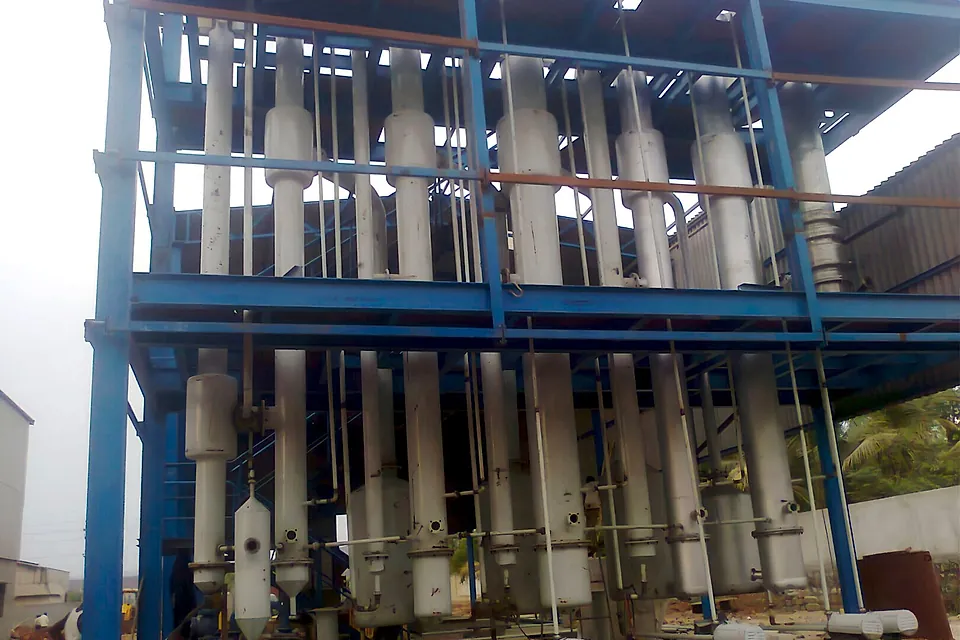
Falling film evaporators
The liquid runs down the inside of vertical tubes as a thin film. Gentle heat and a short residence time suit clean, free-flowing, heat-sensitive liquids.
- Heat-sensitive products
- Free-flowing liquids
- Short residence time
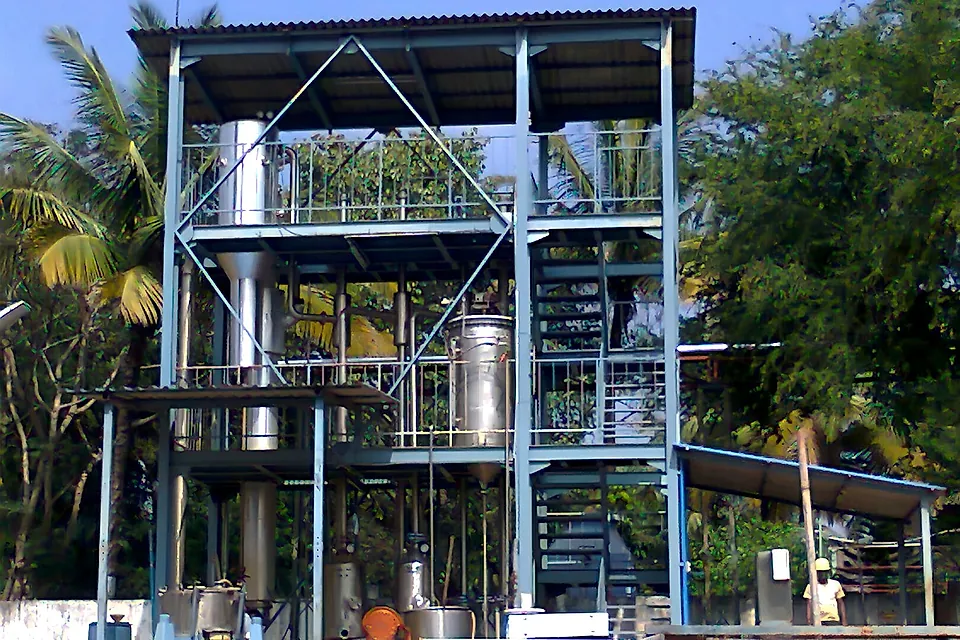
Natural circulation evaporators
Heating makes the liquid rise in the tubes and fall back through a downcomer, with no pump. Simple and economical for clean, low-viscosity liquids.
- No circulation pump
- Simple to run
- Clean liquids
Send your process data. We reply with a recommendation and a budget quote.
Get my proposalWhatsApp
Process engineers at Acmefil Engineering Systems Pvt. Ltd., Ahmedabad – designers and manufacturers of forced circulation and other evaporators, zero liquid discharge plants, dryers and air pollution control equipment since 2000.