Uncategorized
How a Forced Circulation Evaporator Works, Step by Step
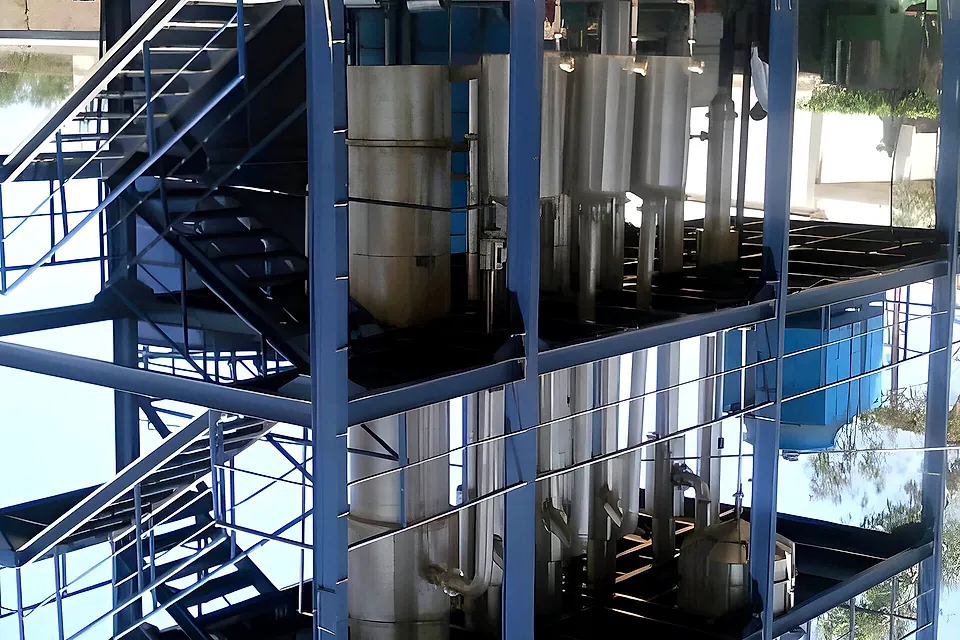
A forced circulation evaporator concentrates a liquid by pumping it round a loop: up through a steam-heated tube bundle, into a separator where part of the water flashes off as vapor, and back down to the pump. Because the pump keeps the liquid moving fast over the heating surface, deposits do not build up. That is why it is the usual choice for liquids that scale, foul, crystallize or are too thick for a film evaporator.
What is a forced circulation evaporator?
It is an evaporator in which a pump, not gravity or boiling, sets the flow through the heater. The main parts are a heat exchanger (the heater), a separator or flash vessel, a large circulation pump and the pipework that joins them into a loop. A condenser and a vacuum system take away the vapor, and a draw-off takes out the concentrate or crystal slurry.
In a film evaporator the liquid spreads over the tubes and boils on the heated wall. In a forced circulation evaporator the liquid is kept under enough pressure inside the tubes that it heats up without boiling there. The boiling happens later, in the separator, away from the heating surface.
How does it work, step by step?
- Feed into the loop. Fresh feed enters the circulation loop, usually on the suction side of the pump, and mixes with the liquid already circulating.
- Forced circulation. The circulation pump drives the liquid up through the heater tubes at high velocity. The fast flow sweeps the tube walls and keeps solids in suspension.
- Heating under pressure. Steam condenses on the outside of the tubes. The column of liquid above the heater, or a restriction at the outlet, keeps the pressure inside the tubes high enough that the liquid heats without boiling on the wall.
- Flashing in the separator. As the hot liquid enters the separator the pressure falls, so part of the water flashes into vapor. Many separators use a tangential inlet so the liquid swirls and the vapor separates cleanly.
- Vapor-liquid separation. The vapor rises through a demister that catches entrained droplets. The concentrated liquid falls to the bottom of the separator.
- Recirculation and draw-off. The concentrate returns to the pump and goes round again until it reaches the target concentration. A bleed takes out concentrate, or a crystal slurry, at the rate that holds the loop steady.
- Condensation. The vapor goes to a condenser, usually under vacuum, so the water is recovered. In a multi-effect plant it heats the next effect instead.
Why the high velocity matters
Scaling happens when dissolved salts come out of solution on a hot surface, especially where the liquid boils on the wall and flows slowly. A forced circulation evaporator attacks both causes. The pump gives a high, steady velocity in every tube, and the pressure keeps the boiling away from the tube wall. The heater stays clean for much longer, heat transfer stays high, and cleaning stops are less frequent.
The same velocity lets the evaporator handle liquids that are viscous or carry suspended solids. Natural circulation slows down as the liquid thickens, and a film evaporator cannot form a good film on a thick liquid. A pump does not have that limit.
Heater layouts
- Vertical heater. The tube bundle stands upright beside or below the separator. It is compact and easy to drain.
- Horizontal heater. The bundle lies flat, which suits plants with limited height and makes tube cleaning and replacement easier.
- Submerged or suppressed boiling. The heater sits low enough, or the outlet is throttled, so the liquid cannot boil in the tubes. This is the standard arrangement for scaling and crystallizing duties.
Crystallizing in a forced circulation evaporator
When the liquid is concentrated past its saturation point, crystals form. In a forced circulation crystallizer they grow in the circulating slurry rather than on the tubes. The separator is sized to give the crystals time to grow, and the slurry draw-off sends them to a centrifuge, filter or dryer while the mother liquor returns to the loop.
Advantages
- Prevents scaling. High liquid velocity keeps deposits off the heating surface.
- Uniform heating. The liquid heats evenly across the tubes, which improves product quality and process stability.
- High heat transfer. Forced flow keeps heat transfer high, so evaporation is faster.
- Handles viscous liquids. Thick liquids and slurries that other evaporators struggle with keep moving.
- Less downtime. Cleaner tubes and easy access for maintenance keep the plant running.
Limits to plan for
The circulation pump uses power and needs maintenance, and the plant costs more than a simple natural circulation unit. For clean, free-flowing liquids a falling film evaporator often does the first part of the concentration more cheaply and more gently. The two are often combined: falling film first, forced circulation as the finisher.
Where forced circulation evaporators are used
- Industrial effluent and zero liquid discharge plants
- Salt, sulphate and chloride crystallization and brine concentration
- Chemical liquors that scale or foul
- Viscous juices, dairy and food concentrates
- Pharmaceutical concentrates and mother liquors
Talk to Acmefil
Acmefil Engineering Systems Pvt. Ltd. has designed and built evaporators at Vatva GIDC, Ahmedabad since 2000, under an ISO 9001:2015 certified quality system. Send us your liquid, the feed and target concentration, what scales or crystallizes out and the flow, and our engineers will size the forced circulation evaporator and send a budget quote.
Forced circulation and its neighbours
Forced circulation evaporators
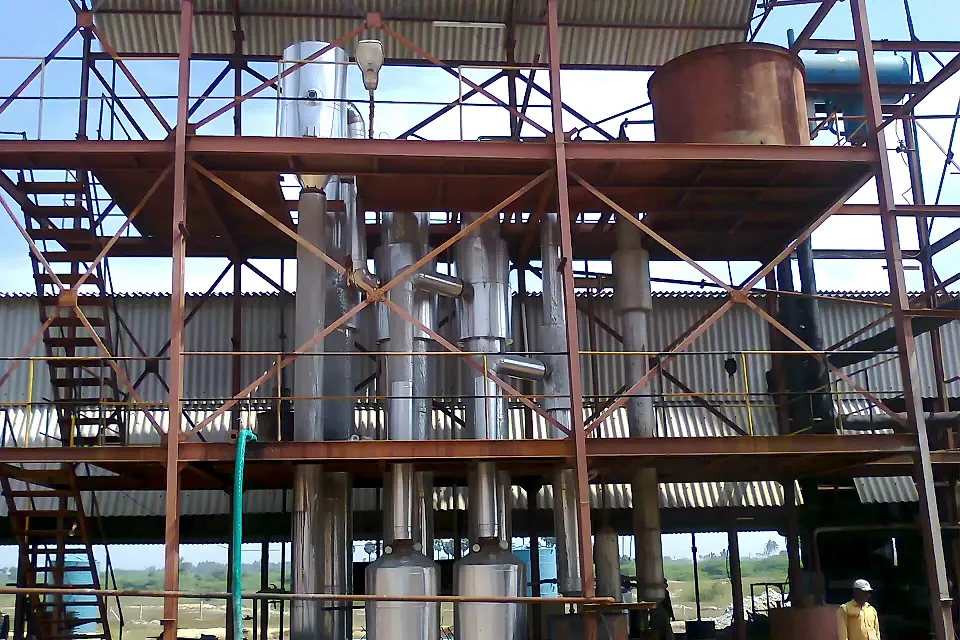
A pump drives the liquid through the heater tubes at high velocity and into a separator. The heating surface stays clean, so scaling, crystallizing and viscous liquids keep running.
- Scaling & crystallizing liquids
- Viscous feeds
- Effluent & ZLD
Falling film evaporators
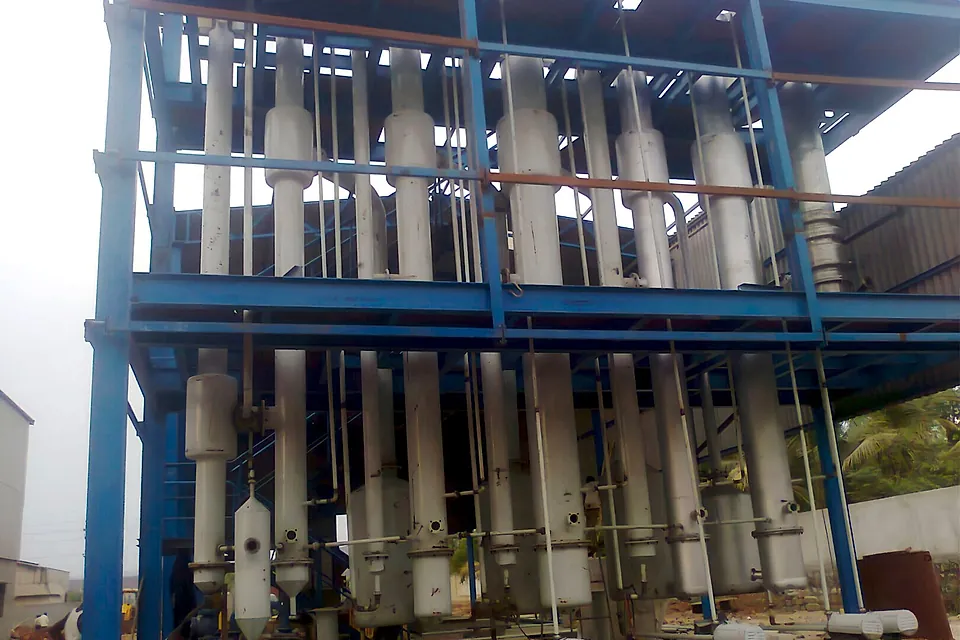
The liquid runs down the inside of vertical tubes as a thin film. Gentle heat and a short residence time suit clean, free-flowing, heat-sensitive liquids.
- Heat-sensitive products
- Free-flowing liquids
- Short residence time
Natural circulation evaporators
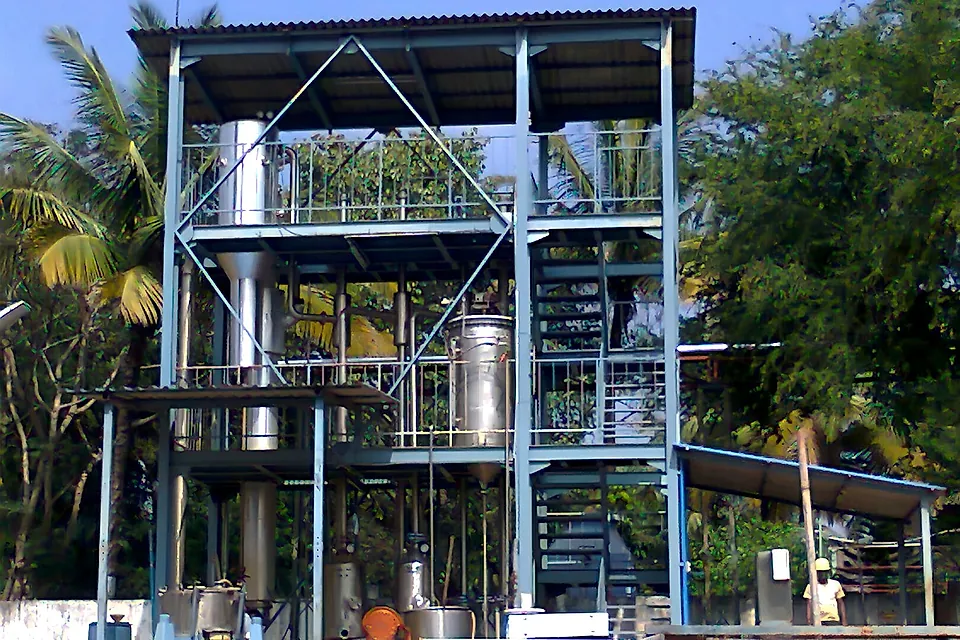
Heating makes the liquid rise in the tubes and fall back through a downcomer, with no pump. Simple and economical for clean, low-viscosity liquids.
- No circulation pump
- Simple to run
- Clean liquids
Send your process data. We reply with a recommendation and a budget quote.
Get my proposalWhatsApp
Process engineers at Acmefil Engineering Systems Pvt. Ltd., Ahmedabad – designers and manufacturers of forced circulation and other evaporators, zero liquid discharge plants, dryers and air pollution control equipment since 2000.